Potency
According to the United Nations Office on Drugs and Crime (UNODC), "the amount of THC present in a Cannabis sample is generally used as a measure of Cannabis potency."[6] The three main forms of Cannabis products are the herb (marijuana), resin (hashish), and oil (hash oil). The UNODC states that marijuana often contains 5% THC content, resin "can contain up to 20% THC content", and that "Cannabis oil may contain more than 60% THC content."[6]
A scientific study published in 2000 in the Journal of Forensic Sciences (JFS) found that the potency of confiscated Cannabis in the United States (US) rose from "approximately 3.3% in 1983 and 1984", to "4.47% in 1997". It also concluded that "other major cannabinoids (i.e., CBD, CBN, and CBC) showed no significant change in their concentration over the years".[7]
Australia's National Cannabis Prevention and Information Centre (NCPIC) states that the 'buds' of the female Cannabis plant contain the highest concentration of THC, followed by the leaves. The stalks and seeds have "much lower THC levels".[8] The UN states that the leaves can contain ten times less THC than the buds, and the stalks one hundred times less THC.[6]
Marijuana

The term marijuana refers to the dried leaves of the Cannabis plants and the flowers of female plants.[9] This is the most widely consumed form of Cannabis. It contains 3% to 22% THC.[10] In contrast, Cannabis strains used to produce industrial hemp contain less than 1% THC. [11]
Hashish

Hashish, or hash, is a concentrated resin produced from the flowers of the female Cannabis plant. Hash is more potent than marijuana, and can be smoked or chewed.[12] It varies in color from black to golden brown.
Hash oil
Hash oil, or honey oil, is an essential oil extracted from the Cannabis plant through the use of various solvents. It has a high proportion of cannabinoids (ranging from 40-90%).[13]
Kief
Kief is made a powder made from trichomes (often incorrectly referred to as "crystals" or "pollen") removed from the leaves and flowers of Cannabis plants. Kief can also be compressed to produce one form of hashish, or consumed in powder form.[14]
Resin

Because of THC's adhesive properties, resin builds up inside the paraphernalia when Cannabis is smoked. It has tar-like properties but still contains THC as well as other cannabinoids. This resin still has all the psychoactive properties of Cannabis but is harsher and less healthy on the lungs. Cannabis users typically only smoke resin as a last resort when they have run out of Cannabis flowers.[15]
Classification
While many drugs clearly fall into the category of either stimulant, depressant, or hallucinogen, Cannabis exhibits a mix of all properties, perhaps leaning the most towards hallucinogen or psychedelic properties, though with other effects quite pronounced as well. Though THC is typically considered the primary active component of the Cannabis plant, various scientific studies have suggested that certain other cannabinoids like CBD may also play a significant role in its psychoactive effects.[25][26][27]
Health issues
Medical use
Though the medicinal value of Cannabis has been debated, it does have several well-documented beneficial effects. Cannabis is indicated for treating and preventing nausea and vomiting, for treatment of glaucoma due to its lower of intraocular pressure, as well as a general analgesic. Individual studies also have been conducted indicating Cannabis to a gamut of conditions running from multiple sclerosis to depression. Extracts of Cannabis have also been created and sold as prescription drugs in the United States, primarily for the treatment of pain and nausea.
Long-term effects
The smoking of Cannabis is the most harmful method of consumption, since the inhalation of smoke from organic materials such as Cannabis, tobacco, and rolling papers can cause various health problems.[28]
In comparison, studies on the vaporization of Cannabis have found that subjects were "only 40% as likely to report respiratory symptoms as users who do not vaporize, even when age, sex, cigarette use, and amount of Cannabis consumed are controlled."[29][30][31] Another study found vaporizers to be "a safe and effective cannabinoid delivery system."

Some research still concludes that cannabis smoke poses a higher risk of lung cancer than tobacco.[33] However, many researchers have failed to find a correlation. [34] Recent research has even found evidence of a protective effect against cancer. These effects have been attributed to the well documented anti-tumoral properties of cannabinoids. Studies have found that cannabis use can protect against head and neck cancers,[35] as well as lung cancer. [36] Some studies have even shown that the non-intoxicating ingredient CBD found in marijuana may be useful in treating breast cancer.[37]
Cannabis use has been assessed by several studies to be correlated with the development of anxiety, psychosis, and depression,[38][39]no causal mechanism has been proven, and the meaning of the correlation and its direction is a subject of debate that has not been resolved in the scientific community. Some studies assess that the causality is more likely to involve a path from Cannabis use to psychotic symptoms rather than a path from psychotic symptoms to Cannabis use,[40] while others assess the opposite direction of the causality, or hold Cannabis to only form parts of a "causal constellation", while not inflicting mental health problems that would not have occurred in the absence of the Cannabis use.[41][42] however,
Though Cannabis use has at times been associated with stroke, there is no firmly established link, and potential mechanisms are unknown.[43] Similarly, there is no established relationship between Cannabis use and heart disease, including exacerbation of cases of existing heart disease.[44] Though some fMRI studies have shown changes in neurological function in long term heavy Cannabis users, no long term behavioral effects after abstinence have been linked to these changes.[45]
Gateway drug hypothesis
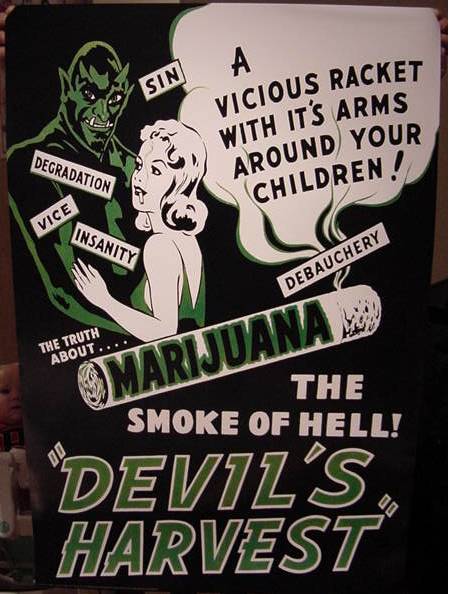
Some claim that trying Cannabis increases the probability that users will eventually use "harder" drugs. This hypothesis has been one of the central pillars of anti-Cannabis drug policy in the United States,[46] though the validity and implications of these hypotheses are highly debated.[47] Studies have shown that tobacco smoking is a better predictor of concurrent illicit hard drug use than smoking Cannabis.[48]
No widely accepted study has ever demonstrated a cause-and-effect relationship between the use of Cannabis and the later use of harder drugs like heroin and cocaine. However, the prevalence of tobacco cigarette advertising and the practice of mixing tobacco and Cannabis together in a single large joint, common in Europe, are believed to be a factor in promoting nicotine dependency among young persons investigating Cannabis.[49]
A 2005 comprehensive review of the literature on the Cannabis gateway hypothesis found that pre-existing traits may predispose users to addiction in general, the availability of multiple drugs in a given setting confounds predictive patterns in their usage, and drug sub-cultures are more influential than Cannabis itself. The study called for further research on "social context, individual characteristics, and drug effects" to discover the actual relationships between Cannabis and the use of other drugs.[50]
The main variant of the gateway hypothesis is that people, upon trying Cannabis for the first time and not finding it dangerous, are then tempted to try other, harder drugs. In such a scenario, a new user of Cannabis who feels there is a difference between anti-drug information and their own experiences will apply this distrust to public information about other, more powerful drugs.[citation needed]Cannabis users should still be considered as a risk group for intervention programs.[51] Other findings indicate that hard drug users are likely to be "poly-drug" users, and that interventions must address the use of multiple drugs instead of a single hard drug.[52] Some studies state that while there is no proof for this gateway theory, young
Another gateway hypothesis is that while Cannabis is not as harmful or addictive as other drugs, a gateway effect may be detected as a result of the "common factors" involved with using any illegal drug. Because of its illegal status, Cannabis users are more likely to be in situations which allow them to become acquainted with people who use and sell other illegal drugs.[53][54] By this argument, some studies have shown that alcohol and tobacco may be regarded as gateway drugs.[48] However, a more parsimonious explanation could be that Cannabis is simply more readily available (and at an earlier age) than illegal hard drugs, and alcohol/tobacco are in turn easier to obtain earlier than Cannabis (though the reverse may be true in some areas), thus leading to the "gateway sequence" in those people who are most likely to experiment with any drug offered.[47]
History
Evidence of the inhalation of Cannabis smoke can be found as far back as the 3rd millennium B.C., as indicated by charred Cannabisseeds found in a ritual brazier at an ancient burial site in present day Romania.[4] The most famous users of Cannabis were the ancient Hindus of India and Nepal. The herb was called ganjika in Sanskrit (गांजा/গাঁজা ganja in modern Indic languages).[56][57] The ancient drug soma, mentioned in the Vedas as a sacred intoxicating hallucinogen, was sometimes associated with Cannabis.[58]
Cannabis was also known to the ancient Assyrians, who discovered its psychoactive properties through the Aryans.[59] Using it in some religious ceremonies, they called it qunubu (meaning "way to produce smoke"), a probable origin of the modern word "Cannabis".[60] Cannabis was also introduced by the Aryans to the Scythians and Thracians/Dacians, whose shamans (the kapnobatai—“those who walk on smoke/clouds”) burned Cannabis flowers to induce a state of trance.[61] Members of the cult of Dionysus, believed to have originated in Thrace (Bulgaria, Greece and Turkey), are also thought to have inhaled Cannabis smoke. In 2003, a leather basket filled with Cannabis leaf fragments and seeds was found next to a 2,500- to 2,800-year-old mummified shaman in the northwestern Xinjiang Uygur Autonomous Region of China.[62][63]

Cannabis has an ancient history of ritual use and is found in pharmacological cults around the world. Hemp seeds discovered by archaeologists at Pazyryk suggest early ceremonial practices like eating by the Scythians occurred during the 5th to 2nd century B.C., confirming previous historical reports by Herodotus.[64] One writer has claimed that Cannabis was used as a religious sacrament by ancient Jews and early Christians[65] due to the similarity between the Hebrew word "qannabbos" ("Cannabis") and the Hebrew phrase "qené bósem" ("aromatic cane"). It was used by Muslims in various Sufi orders as early as the Mamluk period, for example by the Qalandars.[66]
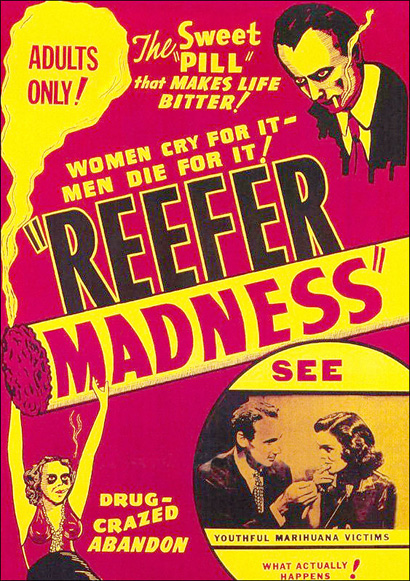
Cannabis became illegal in the United States in 1937 due to Marihuana Tax Act of 1937. Several theories try to explain why it is illegal in most Western societies. Jack Herer, a Cannabis legalization activist and writer, argues that the economic interests of the paper and chemical industry were a driving force to make it illegal.[67][68][69] Another explanation is that beneficial effects of hemp would lower the profit of pharmaceutical companies which therefore have a vital interest to keep Cannabis illegal.[70] Those economic theories were criticized for not taking social aspect into account. The illegalization was rather a result of racism directed to associate American immigrants of Mexican and African descent with Cannabis abuse.[71]
Today, recreational use in the Western world drives a sizable demand for the drug. Cannabis is the largest cash crop in the United States, generating an estimated $36 billion market.[72] Most of the money is spent not on growing and producing but on smuggling the supply to buyers.
The European Monitoring Centre for Drugs and Drug Addiction reports that typical retail prices in Europe for Cannabis varies from 2€ to 14€ per gram, with a majority of European countries reporting prices in the range 4–10€.[73] The United Nations Office on Drugs and Crime claims in its 2008 World Drug Report that typical US retail prices are 10-15 dollars per gram (approximately $430 per ounce).[74]
New breeding and cultivation techniques

It is often claimed by growers and breeders of herbal Cannabis that advances in breeding and cultivation techniques have increased the potency of Cannabis since the late 1960s and early '70s, when THC was first discovered and understood. However, potent seedless marijuana such as "Thai sticks" were already available at that time. In fact, the sinsemilla technique of producing high-potency Cannabis has been practiced in India for centuries.[citation needed] Sinsemilla (Spanish for "without seed") is the dried, seedless inflorescences of female Cannabis plants. Because THC production drops off once pollination occurs, the male plants (which produce little THC themselves) are eliminated before they shed pollen to prevent pollination. Advanced cultivation techniques such as hydroponics, cloning, high-intensity artificial lighting, and the sea of green method are frequently employed as a response (in part) to prohibition enforcement efforts that make outdoor cultivation more risky. These intensive horticultural techniques have made it possible to grow strains with fewer seeds and higher potency. It is often cited that the average levels of THC in Cannabis sold in United States rose dramatically between the 1970s and 2000, but such statements are likely skewed because of undue weight given to much more expensive and potent, but less prevalent samples.[75]
"Skunk" Cannabis is a potent strain of Cannabis, grown through selective breeding and usually hydroponics, which is a cross-breed of Cannabis sativa and C. indica. Skunk Cannabis potency ranges usually from 6% to 15% and rarely as high as 20%. The average THC level in coffee shops in the Netherlands is about 18–19%.[76]
In revisions to Cannabis rescheduling in the UK, the government has rescheduled Cannabis back from C to B. One of the purported reasons is the high-potency Cannabis.[77]
A Dutch double-blind, randomized, placebo-controlled, cross-over study examining male volunteers aged 18–45 years with a self-reported history of regular Cannabis use concluded that smoking of Cannabis with high THC levels (marijuana with 9–23% THC), as currently sold in coffee shops in the Netherlands, may lead to higher THC blood-serum concentrations. This is reflected by an increase of the occurrence of impaired psychomotor skills, particularly among younger or inexperienced Cannabis smokers, who do not adapt their smoking-style to the higher THC content.[78] High THC concentrations in Cannabis was associated with a dose-related increase of physical effects (such as increase of heart rate, and decrease of blood pressure) and psychomotor effects (such as reacting more slowly, being less concentrated, making more mistakes during performance testing, having less motor control, and experiencing drowsiness). It was also observed during the study that the effects from a single joint at times lasted for more than eight hours. Reaction times remained impaired five hours after smoking, when the THC serum concentrations were significantly reduced, but still present. The researchers suggested that THC may accumulate in blood-serum when Cannabis is smoked several times per day.
Another study showed that consumption of 15 mg of Δ9-THC resulted in no learning whatsoever occurring over a three-trial selective reminding task after two hours. In several tasks, Δ9-THC increased both speed and error rates, reflecting “riskier” speed–accuracy trade-offs.[79]
Different strains
There are hundreds of named strains of Cannabis, but their origins (particularly the drug varieties) are often shrouded in mystery. The names of many legendary strains, such as Panama Red and Purple Haze, are ubiquitous in the pop-culture, but the origins of some of these infamous strains, such as G-13, are acknowledged to be urban legends, and some people even doubt their existence.[80]
Strains of Cannabis include:
- Acapulco Gold
- Blueberry Bud
- British Columbia Bud (B.C. Bud)
- Chocolate Thai
- Chronic
- Durban Poison
- Holland's Hope
- Hydro
- G-13 (Gaby)
- Kush
- Mauwie Wauwie
- Netherlands Weed (Nederwiet)
- Northern Lights
- Panama Red
- PG-13 (Purple Gaby)
- Purple Haze
- Quebec Gold
- Silver Haze
- Skunk
- Swiss Miss
- White Widow
The names of some strains have become embedded in the mass culture. For example, Chocolate Thai,[81] which was popular in the early 1990s due to its supposed high potency,[82] was adopted as the stage name of a jazz performer whose album The Real McCoy was released in 2006.[83] Because there is no state control over the production or sale of Cannabis, many so-called "strains" may in fact be just marketing brands adopted by drug dealers to increase sales.
Legal status

Since the beginning of the 20th century, most countries have enacted laws against the cultivation, possession, or transfer of Cannabis for recreational use. These laws have impacted adversely on the Cannabis plant's cultivation for non-recreational purposes, but there are many regions where, under certain circumstances, handling of Cannabis is legal or licensed. Many jurisdictions have lessened the penalties for possession of small quantities of Cannabis, so that it is punished by confiscation or a fine, rather than imprisonment, focusing more on those who traffic the drug on the black market.
In some areas where Cannabis use has been historically tolerated, some new restrictions have been put in place, such as the closing of Cannabis coffee shop near the borders of the Netherlands,[84] closing of coffee shops near secondary schools in the Netherlands and crackdowns on "Pusher Street" in Christiania, Copenhagen in 2004.[85][86]
Some jurisdictions use free voluntary treatment programs and/or mandatory treatment programs for frequent known users. Simple possession can carry long prison terms in some countries, particularly in East Asia, where the sale of Cannabis may lead to a sentence of life in prison or even execution.
Truth serum
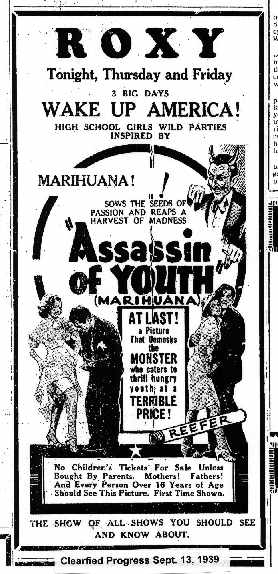
Cannabis was used as a truth serum by the Office of Strategic Services (OSS), a US government intelligence agency formed during World War II. In the early 1940s, it was the most effective truth drug developed at the OSS labs at St. Elizabeths Hospital; it caused a subject "to be loquacious and free in his impartation of information."[87]
In May 1943, Major George Hunter White, head of OSS counter-intelligence operations in the US, arranged a meeting with Augusto Del Gracio, an enforcer for gangster Lucky Luciano. Del Gracio was given cigarettes spiked with THC concentrate from Cannabis, and subsequently talked openly about Luciano's heroin operation. On a second occasion the dosage was increased such that Del Gracio passed out for two hours.[87]
Adulterants
Adulterants in Cannabis are less common than in other drugs of abuse. Chalk (in the Netherlands) and glass particles (in the UK) have been used at times to make cannabis appear to be higher quality.[88][89][90] Increasing the weight of hashish products in Germany with lead caused lead intoxication in at least 29 users.[91] In the Netherlands two chemical analogs of Sildenafil (Viagra) were found in adulterated marihuana.[92]

